Sunday, April 12, 2015

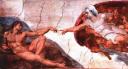
Come Toward the Light

Hieronymus_Bosch_013
The light beckons.. - Pic courtesy of Wikipedia


by Trebor Snillor
LIGHT AT THE END OF THE TUNNEL

My kitchen is now about 90% complete. It lacks faucet, refrigerator and tile backsplash. I’ve actually started moving back in – have unpacked 7 of 11 boxes. The kitchen has a few glitches that I’ll probably let slide.. I want it to be over that badly. It’s @ 10 days past schedule right now; my eagerness to finish it doesn’t translate to anyone else’s eagerness to complete it. I created part of the delay myself.. I thought all full-sized refrigerators were a “standard” size. They are not. The model I chose was 36” deep and would’ve consumed half my kitchen space. Had to trade it for a slender model that’s more even with my cabinets. The faucet is no less tricky – I ordered a Kohler “Evoke” which is a foot high and may well collide with the window sill. Care must be taken at every turn!

COME INTO THE LIGHT

Speaking of light, I’m now thinking of several publicized accounts of people having near-death experiences. A couple of these stories have involved preteen children and one involved an agnostic medical doctor in his 40’s. These stories are always interesting to me, and there are some common threads that run through them. Frequently the subject is being called toward a bright light, and is greeted by deceased relatives, even pets. There are also out-of-body visualizations where the subject hovers over his own ER table while medical recovery proceeds.

One of these was actually turned into a movie, Heaven is for Real and starred Greg Kinnear as Todd Burpo, father of the Heaven-tripping boy. I watched this movie and decided that nothing was overwhelming or convincing at all. The boy’s observations could all have been heard while partially conscious or could’ve been seen earlier in family photo albums. (He described a dead grandfather accurately). Furthermore the story was twice retold by the father and then by the screen-writer – a lot of nuance can suffer through that translation. A teen girl was a focus of yet another near death travelogue – she fessed up that hers was not real. (She did it for attention).

The 40-something doctor published his story in a national news magazine and his story was bizarre. His experience took him to a realm of “pure love” where sentient beings had no bodies and communicated with telepathic feelings but not spoken words. I have to say I didn’t embrace his bodiless heaven – somehow grim, colorless and silent. Was also impressed that his version was different from the others.

I’m a little bugged by the “step-toward-the-light, meet-your-dead-relatives” version that is so oft repeated. I hope that my dead relatives have more and better things to do than be greeters at the Pearly Gates. Furthermore, I don’t want to be a young healthy me in Heaven. There are enough things wrong with this unit (sorry, God) – I want to be an overhauled, vastly improved me. Let me pull out that list – there are THOUSANDS of corrections needed. 23-year old me is still a mess!

I do think there is a superior intelligence and possibly an after-existence. But the events told by these people seem more like near-death hallucinations -- mind games of a brain that is distressed but not deceased. On the next go-round let’s wipe the board clean. I want a new release of me not just a maintenance update. . resetting of the odometer will not be enough. I guess I’m out of anymore cynical observations here .. and my Chai Latte is nearly empty. Therefore I will step toward the light – the afternoon April sun that peeks from behind the clouds momentarily.

© 2015 Snillor Productions

Labels:


Sunday, December 07, 2014

A Looking Glass Universe?

Atisane3
It came from Inner Space - Pic courtesy of Wikipedia


by Trebor Snillor

“You tear apart the baby’s rattle and see what makes the noise inside, but there is a veil covering the unseen world which not the strongest man, nor even the united strength of all the strongest men that ever lived, could tear apart.” -- Francis Church, contributing editor of the New York Sun, 1897

Today’s topic is in the area of “weird science”. I’m neither a chemist nor a biologist so I’ll serve up these ideas as speculation. The reader can hurl it to the trash bin as necessary. 

Mainstream Christianity and “mainstream” atheism are uncivil enemies toward one another – the unkindest of adversaries. But they oddly share something in common. Both areas of thought tend towards reductionist thinking. The idea is that humans are the “summa” product of all creation – that anything smaller than us is merely a mindless constituent ingredient in our biological bill-of-materials. Darwinists and Christians are both egotistically infatuated with human-kind – just differing on how we got here.

Religion uses the sky as a metaphor to God – He and the angels reside in the Heavens. Atheism also looks to the sky.. Cosmic rays and solar radiation are thought to cause biological mutations to the DNA. The SETI projects looks skyward and beyond for intelligent life. Both ways of thinking share a similar “bigger is better” idea. Be it God or some ultimate scientific Truth – it looms much larger and higher than us.

Conversely, we look at small things with an odd sort of disdain. Cells, molecules, prions, atoms and even sub-atomic muons – are seen as mindless mechanistic wind-ups. They follow a rote, robotic ritual with no intelligent guidance. Much like a tether ball circling a school yard pole, electrons are seen as thoughtless orbs that obey some simple orbit. In fact, we may even conjecture a smallest particle or time slice – a simplicity that defies all simplicity.

I would like to suggest that we are looking in the wrong direction for anything of substance. The sky gives us nothing but the stellar byproducts of a formative event – gas clouds and nebulae that are lifeless in any way we think of life.

INSIDE JOB

I am proposing something else very different – intuitive on my part. I think we were created by a masterful intelligence but the act of creating was done entirely from the inside out. Something manipulated the bonding properties of atoms and molecules to build living systems – from inside the atoms themselves. The creative capacity here is mind-boggling, it would be like humans aligning stars by gravitational manipulation. There is also some implicit idea that whole civilizations or sub-universes could exist at a micro-molecular scale. “Absurd” you say.

REDUCTIO AD COMPLEXITY

There is much about our thinking that is arbitrary and even well, blinders-on. We know only an alphabet that starts with “A” not “Z”. A globe that would show Australia on top would be all wrong – primarily because of our concrete, conventional mindset. Humans are in a technological infancy.. Of all that is real and relevant we probably know about one tenth of one percent. We don’t know what causes aging or cancer. We don’t know the origin of life and we don’t really understand dark matter. This is not to denigrate science or philosophy – only to say that the journey has barely begun. We aren’t there yet, nor are we even close.

LOOKING GLASS UNIVERSE

Moving beyond the laws of mere physics or chemistry – is there some advanced sub-universe where people are thoughtful and today’s pressing problems have been solved?

There might very well be “somewhere over the rainbow” – a futuristic world where people treat each other decently and priorities are set right. But that rainbow is contained in a dew drop, a tiny smattering of nothingness that just happens to contain all of reality. We humans are lumbering giants full of pride, ego and pre-programmed fallacies. At some point we need to slow down and see what obviously is, even if it’s very small and not directly visible.

© 2014 Snillor Productions

Labels: ,


Thursday, June 27, 2013

Dude Where's my Karma?

220px-Dudeism_svg
The Symbol for Dudeist Thinking - Pic courtesy of Wikipedia


by blogSpotter
This week, I’ve been confronted with my inherent lack of inspired goal-setting. Some might even call it laziness... A recently retired coworker in his late 40’s is working on two venture capital investment projects, even being paid in stock for his contributions. Another coworker in his early 30’s is going to night school, studying genetic engineering. Night school might be a challenge to me if I were studying basket weaving -- my mind could not grasp anything approaching genes or nucleic acids. I’m impressed by the mojo of my friends and equally impressed by my own apparent indolence.

My leisure time activities are somewhat epicurean … I like good healthy food, music and entertainment, aromatherapy, long naps, shopping, and movies. I actually shouldn’t limit my list to hedonistic indulgences -- I also like to read nonfiction, tinker with gadgets, and work out four times a week. If you drive near White Rock Lake, you might see me taking one of my 3-mile trail hikes.

As far as advancing my finances -- I’ve tackled it with the ferocity of a slug. I log on to look at my 401K account maybe twice a year; I’m a financial couch potato with a couch potato fund mixture. My investments are conservative and boring (a lot of bonds, CD’s, and index funds). I’d rather have a low maintenance mix with less of the roller coaster effect. My 50-something heart can no longer take the excitement of a financial thrill ride. Slow and steady works just fine for me.

I’ve actually thought about going back to school, but not to make a million or start a second career. I’d like to take some Fun Ed type courses: Spanish 101, Creative Writing, Radio-TV-Film and Architectural History. I’d enjoy taking a lot of the Liberal Arts fluff that seemed so terribly impractical in college -- when my course load was determined by an all-consuming lust for a rocket-to-the-moon techie career. For all that I now move slowly, I’d like to take a giant chill pill and slow down even more. To borrow from the cliche line, I’d like to stop and smell the roses.

DUDEISM

This leads me to declare my allegiance to Dudeism, a 21st century, American reinterpretation of the ancient Chinese Taoist philosophy. Founded in 2005 by journalist Oliver Benjamin, Dudeism borrows from Taoism and bases much of its overriding attitude on Dude, the laid back, hippie character in 1997’s “The Big Lebowski” (played by Jeff Bridges). A couple of the major premises of Dudeism is that we bring out the very worst in ourselves when we overemphasize career ambition and material excess. According to Dudeism, every day pleasures like bathing, bowling and hanging out with friends are far better tickets to spiritual fulfillment.

Dudeism started out as something of a gag, but now has thousands of followers -- in fact several thousand Dudeist priests have been ordained. Oliver Benjamin is a latter day Buddha, writing a series of Tao books to advance his Dude philosophy.

Is there anything likely to shake me loose from my Dudeist leanings? It’s highly doubtful in this 4th quarter of my life. Like the proverbial dog who catches the car, I’m not sure what I’d do with it if I caught it. I’m pretty sure I could use some conversational Spanish and I could express myself with some bad poetry. If you get the chance, watch “The Big Lebowski” and see why it has a cult following. And if life’s pressures are giving you ulcers and resentments it might be time to consider a Dudeist adjustment to your own routine.

© 2013 blogSpotter

Labels: ,


Monday, June 25, 2012

Digging in the Zen Garden


170px-Buddha_in_Haw_Phra_Kaew
Statue of Buddha in Laos - Picture courtesy of Wikipedia

by blogSpotter

I recently splurged $8 on a bargain book at Barnes and Noble.,  “The Essentials of Philosophy” by James Mannion.  It gives the reader a whirlwind tour of world philosophy – across all of the ages and all parts of the world.  It gives a condensed version of everything from Plato’s Forms to Bertrand Russell’s mathematical Empiricism.  Turns out that various thinkers have been misunderstood or mistranslated through the ages – Epicurus was characterized posthumously as a Hedonistic bon vivante.   In fact, he was more about quality of life and savoring things at a slow, reasoned pace.  In some ways he was the very opposite of his “sensual man” image.


Virtually every person and philosophy has some merit or reasonableness when seen in a particular context, a singular glint in the prism of “deep thought”.   Some of these, when taken out of context can turn into Frankenstein monsters that need to be dispatched with a pitchfork, quickly. Friedrich Nietzsche proposed the idea of a “Super Human” who acted from confident knowledge, and not groupthink.  It’s ironic that his idea, which had academic merit per se, was twisted into a pretzel of death camp rationalizations by none other than Adolph Hitler.   Frequently such bastardizations happen long after a philosopher is dead and he can no longer set the record straight on what he actually thought or said.


Possibly more interesting in “Essentials” than anything were the ideas of Siddhartha Gautama, aka Buddha.  Buddha was a liberal, Hindu, Indian prince who disavowed some of the violence and illogic he saw in Hinduism.  The contrasting religious background reminds me of how Jesus was a Jewish rabbi – who also became the foundation of a whole new religion.   Buddha originated many aphorisms, principles and ideas (The Four Noble Truths) which I won’t detain you with here.   Many of these ideas overlap with similar wisdom that Westerners might glean from the 10 commandments, the beatitudes or the Book of Psalms.    But Buddha suggested something else altogether unsettling … Buddha says that we chose our parents, our current life situations and our gender in a past life.  


Thus, this life with all its problems and nastiness is something for which we voluntarily checked a box!   We asked for it, as if scanning a special Sears Catalog of perverse conditions.    Put me down for “lower middle class, speech impediment and lackluster career.   A big nose, high forehead should certainly round it all out”. Have to say, I'm pretty sure I never asked for my slings and arrows explicitly. Buddha sees these features as the work of a compensating God, not really a lesser God.  


I’m just not sure where to draw the lines.  Did I live before, and my previous life has some spirit-connection here in this life?   Or is that total nonsense …  Are rewards and punishments something that come in a promised afterlife and not realized already?   Even Exodus in the Bible speaks of the father’s sins visited upon his offspring.   I can’t imagine what sins were done by my forbears; I can only hope that bygones will be bygones.  There are so many ideas to mull over in “The Essentials of Philosophy”...    No one particular idea has an iron grip yet (on me anyhow).   I may need to delve deeper than an $8 bargain bin foray to see what actually exists over the rainbow of this spiritual quest.

© 2012 blogSpotter

Labels: , ,


Sunday, January 08, 2012

Vertical Evolution

220px-Da_Vinci_Vitruve_Luc_Viatour
DaVinci's Vitruvian Man - Picture courtesy of Wikipedia

by blogSpotter
Who was Gordon Rattray Taylor? He was a little known British journalist who wrote on niche topics such as biotechnology and evolution. As he was dying of cancer in 1981, he put the finishing touches on his magnum opus, The Great Evolution Mystery. The book was a commercial dud when it was published in 1983, but has since been reevaluated and much more appreciated. Taylor doesn’t answer any long-standing questions, but in the book he asks several very worthy questions about evolution.

We have now, as in 1983, two prevailing paradigms to explain the origin of life. In the ivied towers of academia there is the theory of Natural Selection – it basically asserts that life has evolved from an accumulation of beneficial mutations in organic matter. Those mutations are random in nature and have happened over eons. Gordon Rattray Taylor pointed up some problems – particularly with organs of extreme perfection such as the human eye. Such complexity would be unlikely to happen from “happy accidents” – the delicate structure would require special timing and tuning. Taylor’s objections were embraced by the religious community who likened Taylor’s eye concept to the pious William Paley’s watch.

The (Christian) religious community itself believes that a super human intelligence created life in one great instance, in the Garden of Eden. The time is “backed in” by religious scholars using the genealogy of the Old Testament – anywhere from 6,000 BC to 4,000 BC. Even supposing some forbears lived to be 100, this date would be in glaring contradiction to modern geological data. 6,000 BC is recent in geological time and fairly standard techniques have established the earth itself to be nearly 5 billion years old. Life itself probably surfaced over 3 billion years ago. Taylor wasn’t devoutly religious nor was he trying to promote a particular faith – he didn’t adhere to the Bible genealogy idea. Taylor was accepting of basic earth and fossil facts … he just wanted to have all the evolutionary elements fall in place and make sense.

GEM GEM2
Taylor's book - cover and contents - Pictures courtesy of Secker and Warburg

Taylor was likely on to something. In chapters like “Puzzles and Plans” he notices that evolution seems to follow a winnowing, narrowing process which would almost imply intelligent selectivity. I would join Taylor in posing these kinds of questions. If we go with Darwin’s theory, we must inquire:

- Why have we observed no new species?
- Why have we observed no seriously, naturally mutated species?
- Why is there not one other species of animal that offers competition to humans?

Biology texts of the last 50 years love to point out an English moth which switched from white to black so its wings would be well-camouflaged against factory soot. Another text talked about a species of fish in Africa which changed the color of its scales. In both cases, we’re looking at a minor variation – probably the activation of a preexisting gene. Nowhere have we seen anything sprout horns or wings unexpectedly – unless via deliberate lab tinkering. With due respect to beavers who make dams and ants who build nests, no other species is a master architect. Chimps and gorillas, our closest natural relatives, live in primitive clans. They can poke ant hills with sticks and make grass beds.

WATCHING THE WATCHERS

Taylor suggested, but didn’t say outright, that there might be some other kind of force at work. I myself think that organized religion is partly right – there is a super human intelligence. However it is fallible and it works through evolutionary process. There was no grand concoction in the Garden of Eden.

Here are some speculative answers to the questions above. Let me emphasize that these are my own ideas and not Taylor's…

- Humans are the last major new species. Evolution is intelligently driven and doesn’t reinvent the wheel.
- There are many amazing new mutations – but they are subtle and they happen almost entirely in humans. The greatest debates about physical design have already been won and lost – most mutations are to the soft brain tissue of humans. They are probably too minute for even the most advanced human geneticists or DNA experts to unravel.
- Evolution is efficient, selective and intelligently directed. Once a species has a major “design victory” the intelligence driving other species has some ability to realign itself with a “superior” animal. There is some type of dissociative and mobile property in the driving intelligence.

These ideas would probably be disturbing to conventional theists in several ways. Humans are still "superior" by way of evolutionary selection, but the process isn't as tidy as one would like. We actually are derived from animals and the distinction between adjacent species is murky, somewhat clouded. There is an uncomfortable nearness, even overlap with creatures we'd just as soon consign to a zoo.

This idea might also open other cans of worms – are some human subspecies “selected” over others and if so, which ones. What would be the criteria or the signs to see? We live in a world rife with clues – clues planted by a fallible super (but not supernatural) intelligence. There are biological signs all over the place – the truth is immutably there with much of it spelled out in our DNA and other parts spelled out in rich fossil deposits. If we can get past our own self-centered concerns and petty materialism, we can crack these biological riddles once and for all. In the meantime, we can give credit to Gordon Rattray Taylor for asking the right questions.

© 2011 blogSpotter

Labels: , ,


Sunday, September 04, 2011

Cosmic Fairy Tales

bluefairy
The blue fairy as God figure? - Picture courtesy of Wikipedia

by blogSpotter
Author's note -- My wonderful mother passed away at age 78 on August 16th. She was a fun, special lady and seemed younger than her age, always. She was diagnosed with late-stage pancreatic cancer and lived just 3 weeks with home hospice care after diagnosis. I don't know where anyone goes in the afterlife, but she will add to the joy and laughter wherever it is.

Magic Air

I'll tell a tale
of maidens fair
and dragons fierce
and magic air

I'll tell it not with words precise
or thoughts profound
or terms concise

A child can let the tale unfold
with whimsey, rhymes and actions bold
He'll open wide the shuttered door
To something other, something more


Today's blog is one I've touched on before in other articles, it's a personal favorite and well worth revisiting. In high school English class you were probably served topics like symbolism, metaphor and personification. Most teens find these topics about as exciting as cold oatmeal and would much rather be Tweeting or texting the hour away. When the method of delivery is a Percy Shelley poem or Moby Dick, the dry dullness becomes overwhelming. The literary devices mentioned above are far better understood and enjoyed as personal discoveries. Every other song, poem and fictional work in pop culture has some type of message between the lines – the sensitive listener will pick up and enjoy these (certainly when the topic is something about sex).

One area that is rife with symbolism is children's literature. Aesop and Mother Goose have a lot up their sleeves that our parents never imagined. Even when the message is fairly obvious (Emperor's New Clothes, The Tortoise and the Hare), adults are quick to flush it out of their minds – minds far too busy with Important Stuff. That's too bad -- the morals are so much needed in today's world.

Two of my favorite children's stories are Mary Poppins and the Wizard of Oz. Both of these are full of symbolism not the least of which is their God imagery. College freshmen, properly tanked up on beer, can dissect the importance of the Wizard, the yellow brick road and how it all relates to an emerald city. What was Baum really saying? Yet another movie that serves up miraculous metaphors is Pinocchio. This movie was masterfully delivered by Walt Disney in his 1940 animation, but has fallen into a certain level of obscurity.

Let me set forth some of the things that make Pinocchio a truly relevant, nay cosmic fairy tale:

o It offers not just a “God” but a hierarchy of intelligences – a cricket with conscience, a kindly human puppet maker and a blue fairy.
o It shows a physical consequence to lying – a consequence that gives Pinocchio a lengthened nose and turns hoodlums into braying donkeys.
o It shows a transformational experience – a wood puppet transforming into a live boy after demonstrating fortitude and human love.

It's getting late in the evening – I won't delve into the theological and cosmological bee hives the Pinocchio story kicks open. Even if you're set like quick-dry cement in your religious viewpoint you might still see some points to ponder. What is ironic is that children the world over can be delighted by the concepts presented – and Mommy and Daddy are just glad the rug rats are occupied with a DVD in the back seat.

Unless you've walled your children off in a home school with Veggie Tales on permanent replay, they should get a liberal exposure to a variety of ideas just looking at the classics. You can hammer your kids back into compliance at a later date if need be. Or maybe, just maybe let them open up their imaginations and discover a few things on their own. It might help them to be better rounded people and they'll later get high school bonus points for correctly interpreting Ozymandias.

© 2011 blogSpotter

Labels: , ,


Wednesday, December 29, 2010

Sci Fi Messiah

200px-L__Ron_Hubbard_in_1950
Hubbard holding court in 1950 -- Picture courtesy of Wikipedia

by blogSpotter
What is it that we love so much about a master story teller? If the story is something like a Jackie Collins novel, we know it’s all a fiction but love it nonetheless. A good friend may thickly embellish a story to make it funny or poignant -- we fully appreciate and forgive (nay, encourage) such excesses. In other cases, a religious luminary may tell us a story as an article of faith. If it’s told in a compelling way, we want it to be true; don’t douse us with cold reality. In yet other situations -- a court of law, a science classroom, the truth must come unadorned. The story teller might be perjuring himself if he regales us from a witness stand.

LaFayette Ron Hubbard was a master story teller. Between 1933 and 1938, the prolific author wrote 138 sci-fi and adventure novels (e.g., Buckskin Brigade and Final Blackout). Hubbard who could write (not just type) at 70 words per minute, was just getting warmed up. If his career had been defined only by his writing, his manic achievements would put him in the publishing stratosphere. But Hubbard created a worldwide Dianetics empire and had a net worth of $600,000,000 at the time of his death. Given his excesses, his giddy heights and his (at one point in 1947) suicidal despair, Hubbard was probably an undiagnosed bipolar but that is just this blog author’s speculation.

Egotist, story teller, messiah -- these names attach themselves to Hubbard. But also liar, felon, con artist and letch, depending on the source. Born in 1911, the red-headed Hubbard was nicknamed “Brick”. As a Navy brat, he got to see exotic places such as the Far East. He was a bright, curious boy who achieved Eagle Scout rank in the Boy Scouts. He also had an early interest in psychiatry and spirituality although those didn’t translate into any great college career -- he was drummed out of Georgetown University after only two years with failing grades. Now you might think his career was stymied but you’d be wrong -- he was just winding up. Hubbard’s life covers such broad expanses I’ll just hit some highlights. An in-depth story would take days to tell.

Hubbard was a highly outgoing man with the gift of self-promotion. His biography is filled with proud assertions readily disputed by various witnesses, friends and scholars. There are also some dents and dings along the way, that aren’t part of the official story. Hubbard claims to have been made a lama priest in Beijing; Jon Atack (former Scientologist) says that Hubbard’s own diary from that time fails to make any such mention. In Naval Training School for WWII, Hubbard claimed to be a nuclear physicist though he’d actually flunked those courses at Georgetown. Hubbard touted his 1953 PhD from Sequoia University (in Dianetics), while soft-pedaling the fact that Sequoia was a discredited degree mill. He later claimed to be a Blackfoot Indian blood brother though tribal spokesmen said that their tribe didn’t do such inductions. He was implicated in a 1945 confidence scheme (“Allied Enterprises”) that resulted in a $2900 court settlement (payment by Hubbard to the other litigant). He was relieved of a naval command post after conducting unauthorized gunnery practice off the Mexican shoreline.

With all these scurrilous details one might think Hubbard was a washed up, braggart blowhard. But in fact he was able to recover credibility by attacking the very prominent Achilles Heel of the nascent psychiatry field. In the 1940’s, psychiatrists were routinely doing lobotomies and electroshock. Whatever folly one might see in Scientology audits, they never involved removal of frontal lobes. In 1950, Hubbard authored a pseudoscientific treatise about Dianeteics, “the scientific method of mental therapy”. Dianetics survived several early setbacks. Contemporary authors and science reviewers described Dianetics as “lunatic” and “cult-like”. His earliest public demo of a “Clear” (healthy mental state from Dianetics) fell on it’s face -- his subject failed to remember any relevant facts. But the bombastic Hubbard pressed forward and founded the Church of Scientology in 1953. He soon had followers throughout Europe and the English speaking world. He added the E-meter, a “biofeedback” auditing device in 1959.

Hubbard started to have IRS problems early on -- his acceptance of salary and emoluments from E-meter sales went beyond the accepted norms for non-profit groups. Scientology also had worldwide credibility issues going forward. They were exiled from Rhodesia for possible economic manipulation. They were expelled from Greece as undesirables. Hubbard was actually convicted of fraud in France, though the fine was never enforced. Hubbard decided to avoid national penalties by putting his headquarters outfit (dubbed Sea Org) on a ship at sea. Hubbard was said to engage in very un-Messiah like behavior -- he had Commodore’s Assistants. These were buxom teenage girls who fixed him drinks and laid out his clothes. The thrice-married Hubbard was also said to be given over to fits of pique and anger. He could swear like a sailor which probably befits his naval background (as well as his probable bipolarity).

Apologies for compressing so much into so little a space. Hubbard’s life sprawled big and far like one of his novels -- so much to cover. Hubbard entertained a fantasy, maybe a self-delusion that he was immortal. He had certainly taken much of the world by storm, he was starting to believe his own mythology. He was involved in a near-fatal motor cycle accident in the 1970’s and Hubbard began to rethink his time usage. He realized that he was a flesh-and-blood person living with the same hourglass that all we mere mortals have. He returned to sci-fi writing in 1977 and wrote Battlefield Earth in 1982 (4 years before his death in 1986 at age 74). He stayed in seclusion the last 6 years of his life, hoping to avoid indictment by a New York grand jury; They were investigating his possible “Fair Game” harassment of a Scientology critic.

Hubbard was certain that he would return to Earth as a reincarnated political leader within our own lifetime. When he actually died in 1986, the Church explained that Hubbard had deliberately discarded his physical body and was conducting spiritual research “one galaxy away”.

Whatever you may think about this man’s credibility, you have to be amazed by his prolific writing and imagination as well as his evangelistic zeal. I was impressed that Marshall Applewhite (of Heaven’s Gate fame) could convince his male followers to castrate themselves. Let’s think about it …A car salesman sells a car and a comedian sells a joke. That L. Ron Hubbard, a sci-fi “philosopher king” could sell a whole reality, a future and a lifetime orientation of audits and e-meters is probably several orders of magnitude more impressive than any salesman, anywhere. In an odd way of looking at it, Hubbard is still alive and well -- his vibrant organization (replete with celebrity “thought leaders”) is thriving today.

© 2010 blogSpotter

Labels: ,


Saturday, January 02, 2010

The Three Earths

3Earths
It started with three... -- Picture courtesy of Wikipedia

by blogSpotter
Today’s topic is admittedly weird and out there; I haven’t done a topic like this in a while. Jackson Browne sings of the place “where the road and the sky collide”. I’ll be talking about a place where science and religion collide, and maybe that’s what Jackson was getting at (although probably not -- the lyrics almost sound apropos).

I’ve spoken in previous blogs about my speculations that there is a God who is both fallible and finite. If you go back and look at some of my previous blogs, you’ll see the overall bent. See these blog entries of mine: God Talk, Amazing Blue Marble, Delusional About God or Apostate Scientist. In accordance with Christian tradition (and to save space) I use the masculine, singular pronoun “he” in referring to God. I could just as sensibly and easily say “she” or “they”. I occupy an almost solitary niche -- most people are either academic atheists or believers in an Abrahamic “mono-” God who is all-knowing and all-powerful. I think both extremes are poor models -- they don’t correlate to the world that actually is.

My God concept is that of a Finite, Intelligent Force (FIF). This FIF is infinitely more interesting than the empty vessel that is random mutations (atheism) or the self-contradictions of an all-powerful God who makes phenomenal mistakes and has to share power with a presumed devil.

FIF is …
Fallible
Finite in his physical dimensions
Striving toward good though sometimes falling short of the mark (like us)
Co-located with his creations

Now, why did I have to lay so much theological foundation to a planetary topic? Because my readers, no science topic is stand-alone. Astronomy ties to physics which bleeds into chemistry which seeps into biology which absolutely is imbued with philosophy and yes -- theology. It’s all a brew that works together. My thesis is that our solar system itself was intelligently created by FIF (See FIF definition above).

At the inception of our solar system, FIF, being both fallible and pragmatic, created 3 potential Earths -- Venus, Earth and Mars. FIF had a measure of deterministic control over the path each would take, but (like fallible humans) wished to hedge its bets with three trials. Anyone of these planets could’ve been made to spawn life but FIF chose a path of less time and work (obviously that being Earth). Let’s look briefly at our two sister planets, the runners-up.

VENUS

Venus takes an entire year to rotate on its axis -- it has no moon. The planet is furnace-hot with incredible air pressure and toxic gases. Any life-harboring planet would have to be part of a binary planet system with a moon that creates tidal forces and diurnal life cycles. My speculation is that Mercury was an intended moon for Venus; unfortunately Mercury fell into the direct orbit of the Sun. FIF could’ve modified the spin and size of Mercury to keep it as a Venusian moon but that effort probably would’ve added billions of years to the advent of life. If there were no Earth or Mars, Venus would be the blue marble, but we might now just be entering the age where oceans are formed.

MARS

Mars actually has two moons -- Phobos and Deimos. It also resembles Earth with ice caps and even has a 24-hour diurnal cycle similar to the Earth. Mars is significantly smaller than Earth and would need a thicker atmosphere (actually more of the Venus greenhouse effect) to maintain anything like deep oceans and breathable air. Again, these are things that FIF could’ve handily brought to Mars but it would’ve added millions of years to the planetary evolution. If there had been no Earth or Venus, Mars would be the blue marble but we would just now be entering something like the Devonian era (vertebrate fish).

In point of fact FIF could probably create life anywhere -- even Jupiter, Pluto or empty space. But FIF is more like us than we want to admit. FIF is probably bound by time and resource considerations. FIF might even be characterized by impatience (not unlike us). Where could all the needed life ingredients be brought together, to create life in the most efficient, least laborious way? Planet Earth was the chosen locale, with it’s substantial mass and reliable moon. Now, a fruitful omnipotent God might have given life to every planet there is-- that didn’t happen. A colliding-molecules atheist universe wouldn’t have even spawned proteins or prions much less humans. FIF serves as a better explanation for both life’s origins and life as we see it today.

In a few million years humans will probably overrun the solar system with life on every surface even remotely subject to colonization. FIF will finish its work with its own FIF-like creations -- that being the human race.

© 2010 blogSpotter

Labels: ,


Friday, January 02, 2009

American Song

First_apple
Opening of a new Apple Store -- Picture courtesy of Wikipedia

by blogSpotter
Today is Friday, January 2, 2009. Being a Friday after New Years, many people are taking the day off and thronging to the stores. I’m one of the throng – I just came back from the North Park Apple Store, where there was standing room only. A crowd of about 30 watched a young man demo features of the Leopard OS. I remember when Apple was an acquired taste and only eclectic dweebs like me had any interest in Apple – the times have certainly changed.

I like that Apple has made such a great comeback from near extinction in 1997. One of the things that makes America great is that it’s a place that engenders experimentation and second chances. Steve Jobs may seem the embodiment of Apple but he’s actually not. He certainly finessed the turn-around and much of the product strategy but he isn’t Apple, per se. Apple is a mixture of corporate vision, design strategy, and diligent employees who deliver amazing products within the structure of corporate laws and aesthetic/engineering challenges. If and when Steve Jobs passes from the scene, there should be a chain of successors to assume the reigns (chief of design, Jonathan Ive, possibly).

Another of the things that make America great is that in general we have no entrenched leaders or philosopher kings. Though we have many dynamic, engaging people, they do not prevail forever, nor do they have any implied ownership of our collective world. I’m reminded of the “12th Tradition” embraced by AA and Al-Anon:

“Anonymity is the spiritual foundation of all our traditions, ever reminding us to place principles before personalities.”

These groups seek to keep a focus on the organizations’ primary purpose, diminishing the role of any one person no matter how exciting or instrumental he or she might be. 12-Step groups have done well by this strategy and so for that matter have other institutions like American democracy itself (to some extent). One only has to look at Red Square in Moscow, where the 80-year old corpse of Vladimir Lenin lies in a vacuum-sealed glass case. How morbidly connected do we have to be to any former leader, however great? Look at Cuba, which grapples with its future identity simply because Fidel Castro is fading in his old age.

One clue in all this is that a tenure or term should end with an election, not a coup d’etat. For that matter, tenures and terms (less than a decade) should be the order of the day for any healthy group – nobody should presume to rule the roost indefinitely. As Obama comes to office in 3 weeks, I’m a bit perturbed by people who have imbued him with spiritual or otherworldly qualities. He is a fallible person with a limited term of office – let’s please leave it at that.

Our American “song” is a song of democracy (albeit flawed), safe passages and comparatively easy transitions. Whether it’s AA, Apple or the United States we humans should be ever reminded to place principles before personalities. We don’t have to be anonymous like AA, but we do have to make a careful distinction between a man and his office. To do otherwise is to open the dark doorway to cults and idol-worship the likes of which we haven’t seen since the pharaohs of bygone eras.

© 2008 blogSpotter

Labels: ,


Wednesday, July 30, 2008

Apostate Scientist

300px-Fred_Hoyle
The man who said too much -- Picture courtesy of Wikipedia

by blogSpotter
Who was Fred Hoyle? He was a noted English Astronomer (member of Royal Astronomy Society), known primarily for his theories of stellar nucleosynthesis. He passed away in 2001, at age 86, and his presence is still felt. His presence is felt not so much for his ideas on stellar processes as for the firestorm created by his "alternative" cosmology. Hoyle stirred the pot by suggesting that there was a fallible intelligence responsible for Evolution, thereby putting himself front and center as an "apostate" scientist. Before further elaborating about Hoyle’s ideas, let's mention the two religious philosophies that basically have dominated western society in the 20th and early 21st centuries:

1) “Abrahamic” religions -- Judaism, Islam and Christianity. These religions postulate an all-powerful, perfect God; they feature messianic figures (speculative or realized) and each claims to be a "one true" religion based on an embrace of faith. All three believe that God has some type of implied power-sharing arrangement with Satan.

2) Darwinism -- Darwin's theory basically asserts that random molecular mutations can recombine enough to yield an intelligent, fit animal. The combinatoric requirements for this to happen (even across 15 billion years) are staggering. It's a leap of faith to think even an amoeba could happen this way much less a cat or a bat. Thusly in my book, Darwinism gets cast as a great world quasi-religion. It's based on an article of faith as flimsy as any religious mythology.

In this breakdown, I'm omitting quite a few other things -- Hare Krishna, Scientology etc. In the Western scientific community, most university professors holding any sway fall into one of the two "majors" I've listed above. Fred Hoyle is noteworthy because he stepped very pointedly aside from either group -- he proposed that there is a God, in fact a tangible one. He suggested a fumble-bum, engineering God who can make mistakes. Rather than a Devil, per se, he speculated that this fallible intelligence might be periodically divided or at cross-purposes to itself.

He famously likened Darwin's theory to a wind blowing thru a scrap yard and accidentally assembling a Boeing 747, thereby incurring the wrath of devout Darwinians everywhere. By the same turn, Christian creationists loved that a Royal Astronomer was debunking Darwin's idea. They did (and still do) haul out Hoyle to explain their own fanciful idea of humans cavorting with dinosaurs. They promptly will place Hoyle back in the closet when it looks like they might be embarrassed by his "fallible God" stuff -- no need to go overboard on it. Where Christians see Hoyle as a boon to their debate, mainstream Darwinists have been very incensed -- science author Robert Shapiro even suggested that Hoyle was insane. It's interesting that people from opposite camps are so excited (one way or the other) by Mr. Hoyle.

I like Hoyle's approach -- it's fairly consistent with what we see around us. Am I in total agreement? Of course not. Hoyle basically advocates panspermia, where biotic material falls to the Earth's surface by some kind of intelligent direction. Would this be from solar wind, comets or something else? The panspermia theory doesn't answer the origin of intelligence, it just changes the setting from Earth to space. So where did space intelligence come from? I don't care for his panspermia "mechanism" but what I like about Hoyle is the idea that theism doesn't require belief in supernatural phenomena, miracles or any suspension of scientific method. Do I foresee anytime down the road that Hoyle will be embraced as a great sage? No, I don’t. Hoyle is an apostate to both the major religious movements mentioned above. He presents the idea of a God who might be traceable, knowable and even subject to study. It's blasphemy I tell you. And blasphemy that provokes dangerously tenable ideas.

© 2008 blogSpotter

Labels: , ,


Wednesday, December 05, 2007

A Roadmap for Primates?

400px-Male_Olive_baboon
An olive baboon contemplates the importance of being a primate -- Picture courtesy of Wikipedia

by blogSpotter
Candidate Mike Huckabee was recently quoted saying "if you want to believe you came from a primate, that's your business". The irony here is that humans are primates. We are in the same lineage as lemurs, monkeys and apes. What features do we share with other primates? Here is a short list:

• five fingers on each hand
• generalized dental pattern
• primitive (unspecialized) body plan
• opposing thumbs
• forward-facing color binocular vision
• adaptive to many environments; not overly specialized, omnivorous
• nonaggressive physical build (no fangs, claws or hulking muscles)

The primate's "primitive" body type is what made him the master over other animals. The primate's hands were never transformed into flippers or hooves. Some mammals sacrificed their front limbs for use in locomotion. Carnivorous mammals developed dagger-like teeth and sharp talons for bringing down prey. Primates maintained their hands for multi-purpose tinkering, and their fore limbs were never sacrificed to a single-minded purpose. Oddly, two lowly non-primates, squirrels and opossums, have a survival advantage over more sophisticated creatures like horses and dolphins. Their advantage is from having digits that can grasp, like those of a primate.

What does any of this matter? It has philosophical and theological implications for the amateur naturalist such as me. Neo-Darwinists loathe believing that Evolution moves in any direction, much less in a progressive way towards an 'end game'. The pattern of Evolution suggests that there truly is a direction. Look at our taxonomical system: kingdom, phylum, class, order, family, genus, and species. Starting from species and working backward, each stratum's most recent entry is further and further into the remote past. Humans (a 'new' species) date back @ 2 million years and a new order probably hasn't occurred in tens of millions of years.

Many religions including Christianity detest believing that humans came from apes. The fossil evidence is overwhelming that we did come from apes and it doesn't particularly bother me to think we evolved that way. In your mother's womb, you progress from a zygote, to a fish-looking embryo, to a squalling newborn. That progression is more dramatic than ape evolution and it happens before our very eyes.

ON BECOMING A NON-PRIMATE

What bothers me is not the idea of 'evolution with purpose' or proximity to apes. What stokes my curiosity is how animals with which we share ancestry branched away from us at some point in time. Dogs and humans probably share an ancestor with a primitive "prosimian" mammal. Humans even share an ancestor with snakes if you travel as far back as the age of salamanders. But at critical junctures, some species forsook the very features that made them potential primates. A lizard mutant lost its legs to become a snake. A prosimian traded hands for paws. It's all neither here nor there you say -- water over the dam.

Let's move the clock forward to more recent evolution. Baboons are a large, successful breed of monkeys -- they rival apes in their intelligence, dexterity and social structure. But the baboon has a dog-like snout, canine teeth and even a bark of sorts. It's also comparatively aggressive. Gorillas are also a very recent evolution. The silverback male can tear a man from limb to limb if so inclined. What strikes me with these two examples is that they violate the "nonaggressive" criteria laid out above. It's as if the primate features serve as a sort of guideline, and straying far in any direction condemns a species to “animalhood”.

Could it be that the “lost souls” of religious stories are not figures burning in Hell, but instead they are the animals that we have as pets and livestock? If Evolution is continuing along this track, there are probably human subspecies that risk spinning away from the primate evolutionary roadmap. Humans have added verbal aggression and lying to the “fangs and claws” listed above as non-primate qualities. Lawyers and car salesmen come to mind. There are also humans who tend toward overspecialization in particular areas (avid swimmers?) or particular diets (vegans?) or particular trades. Could it be that the winnowing process continues its selection based on the primate roadmap?

THE AVATAR

My guess is that the winnowing process is still at work. In describing it, one has to be careful not to slip into the quicksand pit of racism or eugenics – I’m hoping to steer clear of that. My conjecture is that Evolution will continue to refine and define what is to become the “ultimate human”. This process might work in conjunction with man’s own technological achievements. Possibly at a time when man is nearly immortal and no longer even needs to reproduce, the ultimate human will arrive. It won’t be a race or subspecies but precisely one person. In Scott Adam’s “Dilbert Principle” he describes the concept of an Avatar – one wise, knowing man. I’m conjuring to mind a very similar thing.

Religions have this concept particularly in the idea of a Messiah. However the Avatar will most likely be a person with modest mannerisms – not any type of public, bombastic or bragging individual (primate principles, remember). This person will keep his special designation to himself, assuming that he has any outright awareness of it.

AND IN CONCLUSION…

We live in a strange world where religion and science are at irresolvable loggerheads with each other. It’s unlikely that any religion will be proven to be ‘the real’ one. Equally unlikely is that scientists will convince believers that Evolution really occurred. Theists will never convince agnostic scientists that any type of God exists. What is more likely is that each group will go confidently and serenely about its business, tuning out anyone who disagrees. And that one who possesses an ultimate Truth will go quietly about his or her business – making no waves for people who have already decided what the case must be.

© 2007 blogSpotter

Labels: , ,


Monday, October 29, 2007

The Zinnia Seed

zinnia
The Zinnia Within -- Picture courtesy of Wikipedia

by blogSpotter
The zinnia is a hearty flower that blossoms throughout the Americas. It grows in a variety of colors and subspecies and is beautiful to behold. One thing that the zinnia doesn't do, no matter the light, fertilizer or water conditions -- it doesn't grow into a snapdragon or a rose. Its genetic code has "foretold" its future -- the only thing that outside variations might do is change the relative size or health of the zinnia. Now, with humans we prefer not to think in such terms; we hold to a concept of free will. The sky is the limit for any human potential -- "My daughter could be the next President. My son could be quarterback for the Cowboys". This is what fuels our dreams and carries us through the day. What many a parent fervently intones is, "I don't want my child to have the crummy life I had...".

Now as advocate for the Devil I have to point out a couple of things. Humans are a sociobiological species much like ants. Ant colonies have a relatively simple labor breakout of soldiers, nurses, farmers and one queen. The individual ant wasn't given lessons or inspirational lectures; its behavior was genetically mapped. It's largely the same with humans, I hate to say. Much is made of India's occupational caste system because it seems inherently unfair and restrictive. In fact, it is restrictive and anti-democratic -- it should be abolished. But when the lines of demarcation are erased, don't be surprised when a lawyer still spawns a lawyer and a plumber spawns a plumber. "Ha!" you say. Abe Lincoln was born to a share cropper and became a lawyer president. How do I reply? I say, give education and economic opportunity to everyone as Lincoln had. How many great emancipators will we get out of that? The pairing of Lincoln's parents probably gave him a genetic 'score' that made him exceptional (note the word exceptional).

Most apples will tumble close to the apple tree. Even when genetic recombination is thrown in, the dice will fall in predictable ways. If for instance your teenage son is shy, geeky and good with numbers the chances are slim that he will throw for the Cowboys or run for President. It by no means limits his success or happiness. He could still be a CIO, head of MIS or marry well. The genes don't say exactly what will happen, they merely give a 95% certainty that some things WON'T happen. The genetic allotment tells us what will happen generally but not specifically.

John Calvin, the 16th century theologian was lambasted in history for talking of Predestination (where God's "elect" were selected prior even to Creation). Calvin got a bum rap in a couple of respects. Predestination was already a well-developed concept before Calvin -- he grappled with issues surrounding it without ever actually being its "champion". Secondly, your genes and chromosomes do predestine you in certain ways. A dog or cat certainly isn't going to pen the Great American Novel. And depending on your social group, and whom you select for a mate, your offspring may have about the same likelihood as our furry friends of writing a good novel. Does this say we should throw in the towel, since every event is foregone? By no means. Your inner zinnia should still be nourished to be the most radiant one possible. And the introduction of new genes from your upcoming marriage could still introduce some Presidential qualities. Al Gore’s daughter could become your in-law. ;-) Various theories in sociology (that deal with labeling and group association) suggest that is also unlikely BUT NOT IMPOSSIBLE.

Sociology takes us into a whole other terrain so let’s stop there. And we’ll embrace the flower within, no matter how pre-programmed it might be.

© 2007 blogSpotter

Labels: ,


Friday, September 07, 2007

In His Image

God_is_not_great
Hitchens talks about God -- Picture courtesy Wikipedia

by blogSpotter
I just read one atheist book, The God Delusion by Richard Dawkins. I found some points of common ground, but on the most important of points (belief in God), I had to differ. I like the way some of these atheist writers get me to thinking. I'm now listening to Christopher Hitchens' God is Not Great. Hitchens is a staff writer for Slate on-line magazine; in this world of strange bedfellows, Hitchens is politically conservative, pro-W Bush and in favor of the Iraq War. In fact, part of the motive for this book was his distaste for Islamo-fascists and the whole concept of religious jihad.

Hitchens makes some interesting points about how we color in the outline of God. We were made in his image, so it's said, but Hitchens believes we have it backwards. With our avid imaginations, we've created God in our own image. And what kind of God have we created? Apparently a very insecure God -- he wants us to bow, scrape and pray to him on a regular basis. He wants us to beseech him for favors, beg forgiveness and make monetary if not human and animal sacrifices. He's the God of tasteless practical jokes -- how else to explain his commanding Abraham to sacrifice his son and then calling it off at the last moment? The God described in the Bible is punishing and vengeful -- even in the New Testament he displays more of a wrathful than reasoned approach.

So what have we devised here? A person like this God would be: vain, insecure, intolerant, short-tempered, inappropriate, cruel, nasty and vindictive. A person with these traits would be on the "do not invite" list. And yet we have no qualms ascribing these exact traits to our Higher Power. I myself depart from organized religion on these points -- the God of my own understanding is not a blustering egomaniacal rage-a-holic.

Imagine if you will, the traits that make for an excellent human. These might include: humility, self-assurance, understanding, forgiveness, deep insight, kindness and love. Depending on how human you want to make him he might also have a sense of style, adventure or humor. My God would never ask me to kill my son, not even as a test. And he's not so insecure about my fealty or belief in him that I must ritualistically recite chants or face a certain direction. He made me and knows every nook and cranny of my mind.

I'm only a couple of chapters into the book, so more may be revealed. Hitchens speaks of a road checkpoint in Belfast where the armed soldier asks him his religion. "Well, I'm an atheist," he replies. The soldier is not satisfied in the least. "Are you a protestant atheist or a Catholic atheist?" The nonsensical nature of this exchange will be obvious to a secular believer such as me -- and it will make perfect since to an Islamo-fascist. I'm sure Hitchens, like Dawkins will part ways with me in some fundamental topics further on, but so far he makes some good points.

© 2007 blogSpotter

Labels: , ,


Tuesday, April 10, 2007

Unintelligent Design

Darwin
What Would Darwin Do? -- Picture courtesy Wikipedia

by blogSpotter
Bruce Chapman and John West are President and Associate Director, respectively at a policy think tank called the Discovery Institute. In today's Dallas Morning News, they question why Darwinists are afraid to debate them -- they are Intelligent Design proponents. I can probably help to shed some light on this, since I have followed an unusual path to my own enlightenment. First of all, let's settle some terms:

Evolution -- Noun. Means 'gradual change'. And that is all it means. It implies no reason why the change happened. People on both sides of the issue have muddied the debate by saying that evolution necessarily means Neo-Darwinist Evolution. It doesn't mean that unless you place the modifier 'Neo-Darwinist' in front of it. You can also have Intelligent Evolution. Example, you say? American automobiles have evolved over decades from the Model T to the Ford Fusion. The change has been mostly gradual, across about 110 years. If you look at junkyards across America, you'll see the fossil evidence of old cars. The 50's might be likened to the Age of Dinosaurs. What caused the change? Intelligent design of course. Teams of highly trained engineers from the nation's best schools designed these cars. Sometimes, as with the 1964 Ford Mustang, we had 'punctuated equilibria' or 'macro mutation' but more typically the changes were gradual and progressive.

God -- Noun. A Higher Power, a superior intelligence. That is all. It doesn't say Jesus. It doesn't say Christian God. Just an unspecified superior intelligence.

Creation -- Noun. Act of creating. It doesn't say when or where or how. It doesn't say Garden of Eden. It just implies that something was created. That could be gradual, over time. It could be the work of many, and it could be the work of a fallible intelligence.

People such as the Creation Science Institute always frame this as a debate between atheists and Christians. Nothing could be sillier or more off-base. No wonder Darwinists don't want to join the debate. They don't want to cede even an inch over to rabid proponents of a particular faith. When I was about 26, I myself determined that there must be a higher power. Prior to that, I was a Darwinian atheist. My epiphany was not a Christian awakening -- it wasn't even connected to any organized religion. Mine was more a logical progression using even some of the logic of Intelligent Design enthusiasts. The likelihood of even advanced proteins happening accidentally is nil.

Until the debate is framed correctly, and the proponents of Intelligent Design can firmly disassociate themselves from witnessing for a particular religion, there will be no meaningful debate. Admittedly, I occupy an almost solitary niche -- the God of my understanding endorses no organized religion. A religious pamphet I picked up tells me that if my God isn't a particular type of religion, that God is by definition the Devil. Well, they say the devil is in the details and it may come to pass after all is said and done -- we'll find that only the Devil has the details.

© 2007 blogSpotter

Labels: ,


Tuesday, July 19, 2005

The Power of Myth

super heros
Super Heros


In rereading my previous blog, I may have come across as too smug and critical, especially when talking about the Scientologist's mythology involving Xenu. Yes, the story of an evil emperor and his thetans is far-fetched -- it would qualify as imaginative fiction. Such a silly story -- no wonder the Church of Scientology keeps it off their main web site. They don't want to scare a new prospect. You can tell there is a big "BUT" approaching....

BUT, mythology serves a purpose after all. In this wide world there are things bigger than us (some would liken it to God) and things invisible but quite real. Even in the realm of the ordinary, unaided human eyes cannot see atoms, photons, bacteria, radio waves, ultraviolet light or distant galaxies. In fact, our eyesight is rather crude and geared to the hunter-gatherer lifestyle of early humans. The powers that made us deemed that seeing a buffalo or an opposing warlord was sufficient for human vision. Many things that exist and are worth seeing don't fall upon your retina without help from an electron microscope or a planetarium telescope.

So how does this tie back to Scientology? IF you have a belief in a superior intelligence, you may want to describe a cosmological or theological model. There may be forces of "good" and "evil" to which you want to ascribe values, characteristics, personalities. And thus, you have mythology. A sampling of mythic beings: ghosts, demons, witches, warlocks, aliens, zombies, vampires, monsters, super heros and the list goes on and on. Using such characters, your story will unfold in a way that is understood by children and yet it may be probed for deeper meaning by adults.

My own cosmology involves a superior intelligence that would be difficult to describe in ordinary terms. Also, the physics of time and space plays a part in mine. The characters are interesting and they play in a world of bizarre physics -- a time-warping, possibly recursive universe. If my cosmology were to steal from any story, it would be "Wizard of Oz". Why? Because there is a little bit of duplicity and duality of characters -- a Carnival Barker who is also a Wizard. Things so familiar have another role, a hidden side, a fantastic other dimension. What you see is only a fraction of what you get.

Crazy? I'm hearing the refrains of a Patsy Cline song. Now I've gone loony, just like L. Ron Hubbard. I still would never endorse Scientology -- I don't buy into their mythology, and they seem to be interested in your pockets more than your soul. But I will respect their right, and anyone's right to mythologize. I won't be sending them to Belleview, but neither will I put money in their hat.

Labels:


Wednesday, July 13, 2005

Battle of the Titans

matt and tom
Tom and Matt on Today

The actor Tom Cruise, in his strange attack on psychiatry, brought up an interesting topic. Pragmatist that I am, I always thought that Freud's ideas about oedipal complexes were some type of gross oversimplification. And cognitive therapy always seemed like undiluted bullshit. This type of therapy is best exemplified by Bob Newhart saying, "Follow that thought Mr. Petersen." Certainly there is beneficial catharsis in talking of your inner thoughts and misdeeds. But does it actually cure anything significant in your brain's wiring? Psychiatry redeemed itself some in recent years with the advent of psychoactive drugs that actually do what they say (e.g., SRI’s for depression and obsessive/compulsive behavior). Psychiatry moved ever closer to hard science from that state of soft, psycho-babble mushiness.

Now comes neural expert Tom Cruise. And what is his beef with psychiatry? Those very drugs - Ritalin, antidepressants, etc, that cause definitive changes in the functioning of neurons. And he even personalized the attack by using Brooke Shields’ medication for postpartum depression as an example. Were Tom to come at it from a different direction, I might say "Bravo, Tom". But Tom is coming from a place called Scientology. Tom is parroting the Scientology line -- a stern opposition to shrinks. Psychiatry is so "unscientific". And what does Scientology offer as an alternative -- a series of electronic readings called "ingrams" that say how free you are from thetans. What are thetans? According to L. Ron Hubbard (now deceased), they are extraterrestrial creatures who were deposited on Earth millions of years ago, frozen and dead. An evil galactic emperor, Xenu, put them here. And now the souls of these dead thetans haunt human bodies.

Why is it that both approaches leave me unconvinced? The thetan story would qualify a more average person to a padded cell, mass doses of Thorazine and occupational therapy at Belleview hospital. But it's all in the delivery -- other silly things have gained credence from a good sales pitch: spray-on hair, pet rocks, mood rings, chia pets and most anything sold by Ronco. There are aspects of Christianity itself that would qualify lesser evangelists for a straight jacket. What's that you say? He walked on water, raised Lazarus from the dead, and fed the multitude with a loaf of bread? Perhaps you need a 6-week stay at Club Belleview.

Cynic that I am, I liken the Church of Scientology to a grifter who sees another con artist treading on his turf. Prior to truly effective psychiatric medications, it might be a coin toss between cognitive therapy and scientology – which will make me better? Both are somewhat a crock after all. Now, psychiatry has been supplemented with neuroscience, and there are actual results to be had. Are drugs sometimes over-prescribed and abused? Certainly. Does that mean that all use of these effective drugs should be curtailed? Certainly not. So I’ll now leave it to Brooke Shields to set Tom straight. Matt Lauer went too easy on the guy.

Labels:


Tuesday, May 31, 2005

Amazing Blue Marble

earth2
Lunar Earth View

GARDEN PLANET

Humans, egotists that we are, make much of us -- our evolution. There are some things almost as remarkable, happening in the background that we take for granted. We’ve given so much focus to the actors, we’ve paid no attention to the stage itself. And what a remarkable stage it is. Here are some factors that make this planet so unusual, in ways unusually good for life:

 We have a binary planet system – with a satellite moon a third as large as Earth
 The moon gives us ocean tides which contribute to tectonic plate shift and continental drift
 The preceding gives us continents, which give us land life
 The moon also helps to give Earth a 24 hour rotation period, evening the temperature and creating diurnal living systems
 Relative constant temperature, averaging @ 70 degrees, and a moderate 1 atmosphere of pressure
 Enough volcanic activity to initially create a thick atmosphere, which itself long ago condensed into a life-giving saltwater ocean that now covers 75% of the planet.
 A strong magnetosphere - blocks solar wind, helps contain the atmosphere
 80% Nitrogen/ 20% oxygen atmosphere that sustains plant and animal life
 Mountain formations, that give us a fresh water cycle
 Clouds which distribute water and block UV rays
 Deciduous trees, whose discarded leaves provide a natural fertilizer, top soil and blanket warmth for winter seasons

And there are many other things beyond what’s listed here – things we take for granted. Life processes affect some of these things – such as air composition and topsoil conditions. But several of the above phenomena preceded the appearance of life on Earth – moon, oceans, magnetosphere. Other things are independent of life processes, but greatly influence life’s evolution – such as land mass formation and fresh water cycles. It’s almost as if the planet were specially designed with life in mind. In fact, the happy circumstances that led to this are unlikely to happen by accident, or even at all.

A HAPPY ACCIDENT?

Believe in constructive accidents if you want, but my own intuition is that design was more a factor than good fortune. The early Earth was an identical twin to Venus as it is now – a nasty cauldron of high-pressure heat. The conditions leading to life were as unlikely in one setting as the other. But Earth became the amazing, blue marble while Venus continues to boil. If you believe in intelligent design, it’s not a much further step to say that God designed life’s setting as well as life itself.

An inspiration for this article is “The Ages of Gaia” by James Lovelock. His take is that the Earth is itself like an organism, but one that came about by a throw of the dice. I myself see a more direct intelligence involved, but people who have a more agnostic or Darwinian approach may find Lovelock’s book an excellent read. Whatever the case, Earth is amazing. This gorgeous planet came about – somehow – and its mysteries are as profound as the mysteries surrounding the animals and humans that now populate it.

Labels: , ,


Friday, May 20, 2005

The Company We Keep

Yellowlabscalico
It's raining cats and dogs

Today's blog is offbeat, and that's how I like them. Am contemplating those companion animals that we call pets. For most of the Western world, dogs and cats are our pets of choice. There is a cultural aspect to this, because in China and Indonesia dogs and cats are food; crickets are pets. In western culture, we have many other pets – gerbils, parrots, and goldfish – but with a few exceptions, nothing that is as universally liked or accepted as dogs and cats. Also hardly any other such animals that we allow to roam freely in our houses and yards outside of a cage. It is interesting that our closest relatives in the animal kingdom – monkeys and apes, are not even close to pet status. Apes terrify humans, and must be kept in highly secure enclosures; monkeys (e.g., squirrel monkeys) can be kept as pets by a few brave souls, but are disruptive and difficult to house train.

Still other animals – raccoons, ferrets, and skunks, have some of the personality that we like but have kept some of their wild ways – they may run, burrow, attack, put out scents and do other things we can’t do indoors. And so – we are left with dogs and cats. What is interesting about dogs and cats is that they’re diminutive, cute versions of animals that would just as soon eat us for dinner (wolves and lions, that is). Nature dialed it way back, and gave us small, cute versions of the carnivores whose fierceness we so admire. Dogs discovered early on that they ate a lot better when they followed human encampments and scavenged the carrion brought down by humans. Cats likewise discovered that human grain repositories were a great place to catch mice. The less threatening (i.e., small and cute) renditions of these carnivores became our adored pets.

There seems to be a gender affiliation with cats and dogs. Dogs are trainable and used for hunting. Cats are graceful and aloof, hardly ever assigned to specific tasks other than maybe catching rodents in a barn. Look at Redbook or Martha Stewart Living – the pages will overflow with cat food ads. Look at male-oriented hobby magazines and you’re more likely to see ads for Alpo dog food. The gender association is very ingrained, even in our language. Women are said to have catfights or be catty. Witches were once thought to morph back and forth into cats. And a vulgar slang for the female anatomy is none other than a cat synonym. (Need I mention Pussy Galore from Goldfinger?) On the other hand, a bad real estate investment is a “dog” and an unkind woman is a “bitch”.

Could it be that maybe these two species represent some of our own character extremes? Women with flame red nail polish and cabaret eye makeup can indeed evoke a feline spirit. A group of men wearing sweats, guzzling beer and watching sports together calls to mind a canine pack. And so … maybe cats and dogs are more universal than we thought. The gender-species connection is intriguing – I’m dogged by the possibilities. How to cat-egorize these groups, I’m not so sure. All I can say is, the animal you hold in your lap is saying much more than “woof” or “meow”. The company we keep, whether it has two or four legs, might say something much more profound about us.

Labels:


Tuesday, April 05, 2005

God Talk


Raphael's God

Today's topic is way off the usual path. (Don't worry, I'll soon return to current events, TV and other frivolity). I'm talking about that controversial word, "God". God is spoken of freely in religious settings, but is somewhat forbidden elsewhere in the secular community. Somewhere in the mid-19th century, the secular, academic community became implicitly atheistic/agnostic. It put itself at arms length from religion. Such things as the Crusades, the Inquisition, and insistence that the Sun orbits around the Earth put theology in a dim light, so the distancing is somewhat understandable.

Now, if you bring up God in a science-oriented, secular setting you will be greeted with cynical smirks. If one were to propose theology as a necessary component of cosmology you'd be laughed off the campus. Words you might hear: "Well, why don't you also include a study of Santa Clause and the Easter Bunny?". Because it is a terrain of the invisible and unprovable, it gets no place at the table. In the religious community on the other hand, you're welcome to talk about God -- on terms established by organized religion. Between atheism and mainstream religion is a small group of people including myself, who see God as part of the picture but would like to discuss it more. Questions I'd like to ask about God:

- Is God male, female or no gender?
- Is there one God or many? If many, is there a hierarchy?
- Is God fallible, can He, She or They make mistakes? (for simplicity will refer to God as "He" hereon).
- Is God mortal himself, changing or evolving?
- Does God have a personality or a sense of humor?
- Does God have a physical presence or locality?
- Does God have manlike attributes, are we really in his image?
- How does God interact with our physical world?
- Does God have time, material and budget constraints like humans?
- Does God have a preferred religion or group of people?
- If life exists on other planets, what implication does that have for the primacy of Earth life? What if creatures on other planets have their own religions and messianic figures?

Now, in theological seminary 101, you'll be welcome to ask these questions. However, if you don't allow yourself to be corralled pretty quickly into the prevalent monotheistic belief, you'll be rapped on the knuckles with a ruler. Welcome to the state of theology -- a science who's last big contributors were Thomas Aquinas and Martin Luther. The objection that the secular community gives to theology is that it's faith-based and has no basis in provable facts. Well, where to begin. The soft sciences of sociology and anthropology are 90% subjective theories that serve mostly to drive the academic careers of professors in those areas. Many things in science are speculation and hand waving: black holes, dark matter, string theory, time travel, worm holes, behavior of quarks, neodarwinism, etc. I'm not saying these things are necessarily wrong, but that discussions are indeed allowed. If I go that wobbly step further and say "I think a superior intelligence had a hand in this", why can't there be a discussion about that? But start with a clean slate, and devise a God model that is consistent with what we have around us (and for that matter, consistent with known scientific facts). Don't rap anyone's knuckles with a ruler, or make them recant.

Well, now I've gone and done it. I've ticked off the believers and the atheists (probably 99% of humans are either atheist or practitioners of mainstream religion). If God is reading this, He, She or They could be very displeased. On the other hand, He, She or They might think it's good idea to throw open the windows and let some fresh, theological air into the room.

Labels: ,


Tuesday, February 15, 2005

Evolutionibus


Creation Posted by Hello

Today I'll take on a topic that could fill 3 tomes - Evolution. As a boy in elementary school, I never believed the Biblical story of creation. Even then, I saw Adam & Eve as nice metaphors, but realized that the Biblical account was terribly far off on the timing (having the Earth only a few thousand years old). People who supported the Biblical account seemed dismissive of the massive fossile and geological evidence that shows how life has changed over eons.

In 8th grade, I was introduced to Darwin's theory of Evolution. At the time, I embraced the theory and later on, it's newer variants (e.g., Neodarwinism and Punctuated Equilibria). It was at least consistent with fossile evidence and the known time scale. However, at the age of 26, a little bit of a priori reasoning and maybe a bolt from the blue told me that highly complex systems couldn't occur thru accidental mutations. Not even a complex organic molecule would come about thru pure chance. I was nearly back to square one. I inferred that there was an intelligence involved, and it left calling cards along its path.

What I've searched for since has been a reconcilation of fossile evidence and logic, and maybe the discovery of a knowable, engineering "God". As far as intelligent design, some people have proposed UFO's, aliens, some type of directed Panspermia, and even one author who thinks some type of quantum-level events cause mutations. Am not fond of organized religion's approach, because of its myopic arrogance, as well as it's insistence on Special Creation (Judeo-Christian code words for "Garden of Eden"). My own feeling is that life evolved slowly, over time, consistent with fossile evidence, but that the changes were intelligently driven.

Our public school systems currently are being bombarded with lawsuits to emphasize that Darwin's theory is only a theory. I'm "down" with that, but am afraid that one brand of organized religion would use this as a way to get it's head in the classroom tent. What would make a far more interesting argument would be to say, "Yes God did it -- and by the way whose God, and exactly how did he go about it?" There's your debate! And it would be a way more interesting discussion, by the way.

Labels: ,